


Written by
Published on
If you have been feeling nauseous, unusually tired, or just not like yourself, it makes sense to wonder what your body is trying to tell you.
Many people find themselves searching, “Is this a stomach bug or could I be pregnant?” The symptoms can overlap, which makes it hard to know right away.
Sometimes nausea is caused by something short term, like a stomach virus or food poisoning. Other times, it may be an early sign of pregnancy. Looking at timing, duration, and accompanying symptoms can help you sort through the difference.
Please note that this article is for informational purposes only and does not replace medical advice. If you are concerned about your health or need a diagnosis, speak with a licensed medical provider.
Signs it may be a stomach bug
A stomach virus usually begins suddenly. You may feel fine in the morning and noticeably sick by afternoon.
According to the Mayo Clinic, common signs of viral gastroenteritis (the stomach flu) include:
- Diarrhea
- Stomach cramps
- Chills or a mild fever
- Vomiting that begins abruptly
- Headache or body aches
- Fatigue or dehydration
The stomach flu typically improves within 24 to 72 hours. If symptoms resolve within a few days, it is more likely your body was fighting a temporary illness.
Food poisoning can look similar. Symptoms often begin within hours of eating contaminated food and usually improve within one to two days.
Other possible causes of nausea
Not all nausea is related to pregnancy or a stomach virus. Other factors can affect digestion and trigger similar symptoms.
Possible causes include:
- Food poisoning
- A new or recently changed medication
- Motion sickness or inner ear issues
- Migraines
- Significant stress
According to the Cleveland Clinic,
food poisoning often begins within hours of eating contaminated food and may include stomach cramps or diarrhea, and typically resolve within 24 to 48 hours.
If symptoms ease within a day or two, a temporary cause is more likely. If nausea continues, pregnancy or another underlying issue may need to be considered.
Can early pregnancy feel like a stomach bug?
Yes, early pregnancy can feel very similar to a stomach illness, which is why the question of stomach bug or pregnancy comes up so often.
The National Institute of Health shares that pregnancy-related nausea, often called
“morning sickness,” can begin around 4 to 9 weeks after conception, and peaks between 7 to 12 weeks. It is not limited to mornings and can occur at any time of day.
The Cleveland Clinic gives a list of common symptoms, including:
- Ongoing nausea that does not improve after a few days
- Motion sickness
- Heartburn or reflux that is not clearly linked to a specific meal
Unlike a stomach virus, pregnancy-related nausea usually does not resolve within a few days. It may continue for weeks, and may come and go throughout the day.

Signs that may point more clearly to pregnancy
When nausea is connected to pregnancy, other changes often appear.
The Mayo Clinic explains that common early pregnancy symptoms may include:
- A missed or late period
- Tender or swollen breasts
- Increased urination
- Ongoing fatigue
- Food aversions
- Nasal congestion that may cause swelling, dryness, or bleeding
If your menstrual cycle is typically regular and your period is late, that is one of the strongest indicators that pregnancy could be possible.
Key differences: stomach bug vs pregnancy nausea
If you are comparing symptoms, focus on onset and duration.
Stomach Bug
- Sudden onset
- Often includes diarrhea or fever
- Improves within 1 to 3 days
Pregnancy Nausea
- Gradual onset
- Rarely includes fever
- Often lasts days or weeks
- May be accompanied by a missed period
Duration is often the clearest difference. A stomach virus usually improves within a few days, while pregnancy-related nausea tends to persist.
How to know for sure
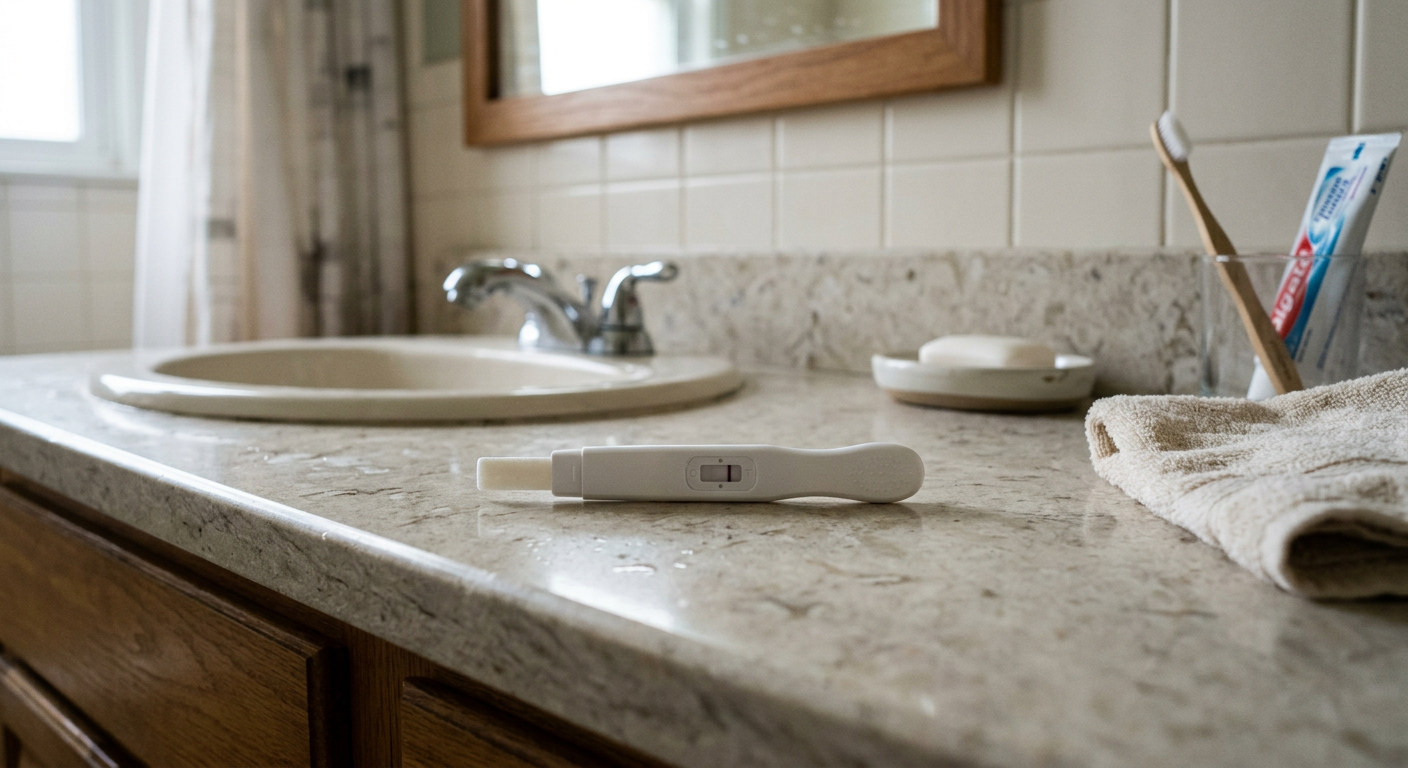
If pregnancy is possible, the only way to confirm is with a pregnancy test.
At-home pregnancy tests work by checking your urine for a hormone called
human chorionic gonadotropin (hCG), which the body begins producing after a fertilized egg attaches to the uterus. The test strip inside the pregnancy test reacts to this hormone.
If hCG is present, the test shows a result such as a line, plus sign, or digital message depending on the test you use. Because the amount of hCG increases in early pregnancy, tests tend to be most accurate shortly after a missed period.
When to take a pregnancy test
According to the Mayo Clinic, many
home pregnancy tests can detect pregnancy on the first day of a missed period, but results are usually more accurate if you wait at least a few days after your missed period so the pregnancy hormone hCG has time to rise to detectable levels.
If you test early and receive a negative result but your period still has not started, testing again a few days later may provide a clearer answer.
Pregnancy testing tips
List of Services
-
1. Check the expiration date on the testItem Link List Item 1
Pregnancy tests become less reliable after they expire. Before using a test, make sure it is within the expiration date listed on the package to help ensure accurate results.
-
2. Use your first morning urine, when possibleItem Link List Item 2
The first urine of the day typically contains the highest concentration of hCG, the hormone pregnancy tests detect. Testing first thing in the morning may improve accuracy, especially if you are testing early.
-
3. Test around the time your period is expectedItem Link List Item 3
Testing too soon can lead to a false negative because hCG levels may not be high enough to detect yet. Waiting until the day your period is due, or later, can provide more reliable results.
-
4. Follow the instructions carefullyItem Link List Item 4
Each test works a little differently. Read the instructions before you begin and pay close attention to timing, sample collection, and how to interpret the results.
-
5. If the result is unclear, test again in a few daysItem Link
An unclear or unexpected result can happen for several reasons, including testing too early. Waiting 2 to 3 days and taking another test may provide a clearer answer, as hCG levels typically rise over time in early pregnancy.
You do not have to navigate this alone
Uncertainty about your body can feel unsettling, especially if the possibility of pregnancy was not something you were preparing for.
At Avail, we offer confidential virtual appointments and text-based support. Our Care Experts are here to listen and help you think through your next steps. You do not need to have everything decided before reaching out.
Avail Staff
Avail Staff creates compassionate, trusted resources for women and men facing an unintended pregnancy or processing a past abortion experience. Since 1996, Avail has provided cost-free, confidential support to help people navigate pregnancy decisions, life after abortion, healthy relationships, and questions about what comes next.
Our articles are shaped by the real questions, concerns, and experiences people bring to Avail every day. Drawing on decades of client care, we combine practical guidance with a nonjudgmental, pressure-free tone so readers can better understand their options, reflect on what matters most, and find trustworthy support without political influence.
Whether you are looking for information about pregnancy, parenting, after-abortion support, relationships, or emotional well-being, Avail Staff writes to offer clear, thoughtful content that helps you feel informed, supported, and able to take the next step at your own pace.
Related Articles
Browse insights, stories, and expertise from across Avail.



Thank you for contacting us.
We’ll get back to you as soon as possible.

We got it.
Be part of our growing community and stay connected to the stories and impact behind our mission